
As Climate Impacts Mount, WHOI Tests a New Way to Lock Carbon in the Ocean
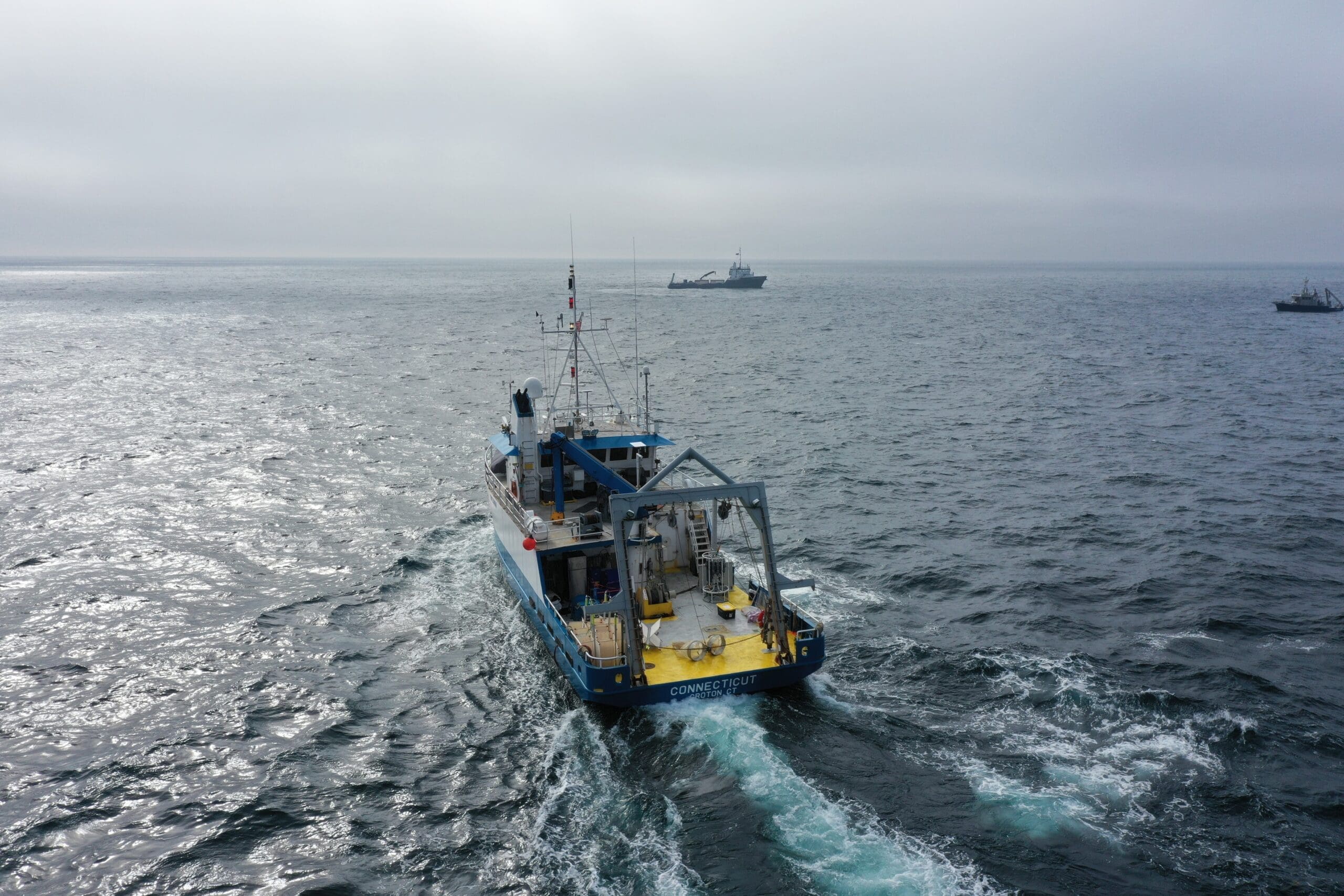
Early one morning on the Cape Cod peninsula, during a week of intense heat and humidity in August 2025 in New England, and as a tropical storm named Erin was brewing off the West African coast, three ships on a mission led by the Woods Hole Oceanographic Institution(WHOI), headed for the open waters of the Gulf of Maine.
This unique flotilla was on a specialized assignment: the first open-water test of ocean alkalinity enhancement (OAE), a pioneering technology that is emerging as a potential solution for removing and storing atmospheric carbon dioxide (CO2), the most significant and common greenhouse gas contributing to human-caused climate change. The results of this test, part of WHOI’s LOC-NESS project (Locking away Ocean Carbon in the Northeast Shelf and Slope), will help determine OAE’s viability for use in open water to combat climate change.
Adam Subhas and a Question Years in the Making
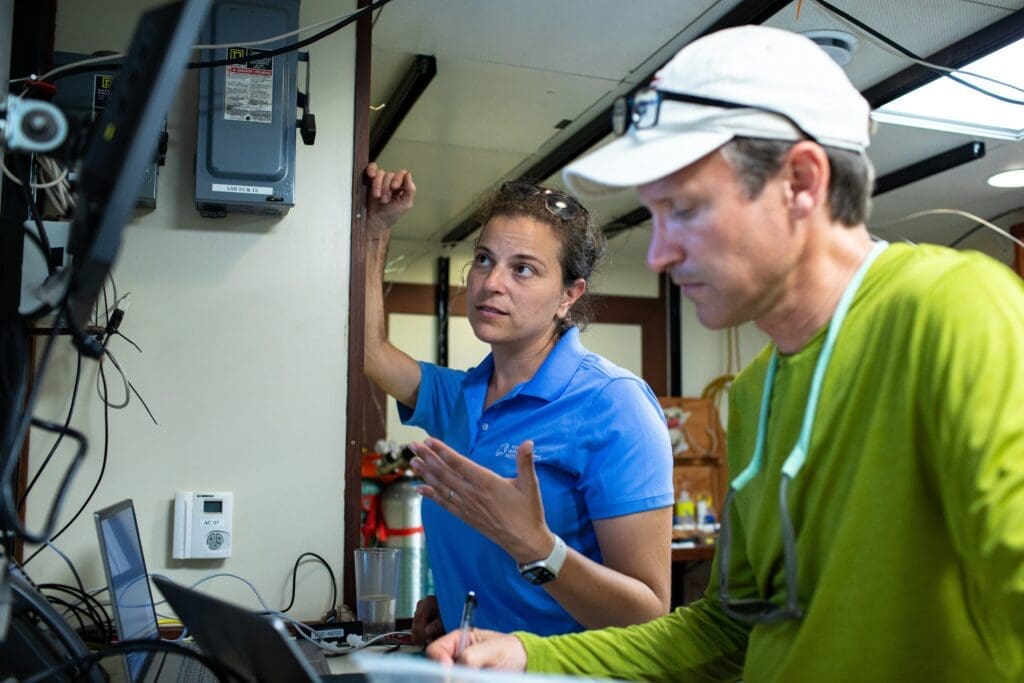
Adam Subhas, Associate Scientist in marine chemistry and geochemistry at WHOI and research director of the LOC-NESS project, led a team of nine scientists aboard the 90-foot RV Connecticut, a research vessel bristling with instrumentation and sensors. The scientists worked in continuous 12-hour shifts to monitor the physical, chemical, and biological conditions of the ocean waters. Nearby, the RV Tioga, a 60-foot ship operated by WHOI, carried three more scientists, along with state and federal fisheries observers.
For Subhas, this trial fulfilled a goal he has been working toward since 2021 when, with support from Ocean Visions, he won a grant from the Climate Works Foundation to study whether the alkaline-rich discharge from the Mississippi River into the Gulf of Mexico could be a natural analog for OAE. That research provided the foundation for LOC-NESS.
The Ocean – A Carbon Ally
“The ocean is the largest carbon reservoir on the planet. It holds 50 times more carbon dioxide than the atmosphere,” says Subhas. “And the reason that this reservoir is so large is because the ocean is alkaline.”
Ocean water is full of dissolved sodium bicarbonate, he explained, basically baking soda that has accumulated there through Earth’s history. In fact, the ocean is so full of sodium bicarbonate that it contains 15 to 20 times the amount found in all land plants and soils combined. This alkaline abundance allows the ocean to naturally convert dissolved CO2 in seawater into bicarbonates and carbonates—inert, stable forms of carbon that can remain locked in the ocean for at least 10,000 years. That’s why the ocean has been a strong ally in the fight against climate change, absorbing roughly a quarter of all man-made emissions since the Industrial Revolution.
All the extra CO2 that the ocean has absorbed from the industrial scale burning of fossil fuels has altered its chemistry, however, increasing acidity and threatening marine life from coral reefs to oyster farms. Adding alkalinity to the ocean neutralizes the acidity and creates a CO2 deficit in surface waters that can lock away additional atmospheric CO2.
“Commercial and recreational fishing is a huge part of the economy and the culture of New England. We needed to meet with these groups in a trusted environment.”
Adam Subhas, Associate Scientist in marine chemistry and geochemistry at WHOI and research director of the LOC-NESS project

Testing an Idea at Sea
Most OAE field trials have been shore-based, adding highly alkaline minerals to the water by using existing outfalls from power plants or from beaches, docks, or other coastal locations. The LOC-NESS project seeks to determine whether OAE can be deployed in the open ocean. Subhas stresses that much more research is needed given the nature and challenge of the open ocean before this method is implemented at a significant scale, but he suggested that in the future, container ships and other commercial vessels crisscrossing the ocean could disperse alkaline materials around the globe.
“Part of the power of doing this in the open ocean—70 percent of the Earth’s surface—is that it offers the opportunity to bring this technology to the scale of the climate crisis.”
The trial began when the flotilla arrived at the Wilkinson Basin, a deepwater depression about 50 miles off the Massachusetts coast. Technicians aboard the Mahoney began dispersing liquid sodium hydroxide, a pure form of alkaline that is fully mixable with seawater. An inert dye was mixed in to help scientists track the patch of alkaline-charged seawater. In addition to the instrumentation aboard the Connecticut, the scientists had help from autonomous, unmanned vehicles below the surface, a fleet of research buoys floating topside, and access to satellite imagery from space.
The shipboard scientists were able to monitor the patch of seawater, which remained largely intact, for four days. One advantage of OAE is that it doesn’t need sunlight or other nutrients, so the process continues throughout the nighttime hours.
In addition to measuring the chemistry of the water, researchers repeatedly sampled at various depths, testing whether changing pH levels measurably affected marine life, especially the phytoplankton that form the base of the ocean food web.
Nature Reminds Everyone What’s at Stake
Over those days, tropical storm Erin became a Category 5 hurricane, intensifying at one of the fastest rates on record, a sobering reminder that climate change is already affecting weather patterns around the globe. After the ships headed back to port, unmanned buoys and autonomous underwater vehicles continued to send back information for a few more days, until the alkaline patch eventually dissipated.
What the Measurements Revealed
What did they learn? The team has only begun to study the massive amount of data, Subhas says, but samples from the field demonstrate the fundamental success of the process. They were able to lower the concentration of CO2 already in the water so, “we know that the ocean started immediately to take on CO2 from the atmosphere,” he says. “Our job now is to put a number on it.”
Building Trust
Subhas emphasized that the field trial in the Gulf of Maine was about more than measuring the efficacy of OAE. Other objectives of the field trial include creating best practices for transparency and communication. LOC-NESS team members organized or participated in more than 50 community engagement and outreach activities throughout the research design and public review process, including meeting with commercial and recreational fishers, lobstermen, and indigenous communities.
As part of that outreach, the research team carried the conversation to the fishing docks and to the fisheries management council and trade association meetings, Subhas says. “Commercial and recreational fishing is a huge part of the economy and the culture of New England. We needed to meet with these groups in a trusted environment.”
The trial moved forward, guided by the first permit ever issued by the U.S. Environmental Protection Agency (EPA) under the Marine Protection, Research & Sanctuaries Act to do mCDR research in U.S. waters. A commercial fisherman participated in the field trial as an observer. The dispersal was witnessed by observers from the Massachusetts Division of Marine Fisheries, the U.S. EPA, the National Oceanic and Atmospheric Administration, and the fishing industry. Based on intensive chemical and biological sampling, the team so far has not seen evidence of damage to marine life.
What Comes Next
If this research and others demonstrate support for OAE in the open ocean, Subhas says this approach will be just one of many needed to reduce the amount of CO2 in the atmosphere. “It’s going to have to be happening all the time, year-round, 24-7 and probably multiple places and will include the coastal outfall approach and others.”
Ocean Visions, he added, has played an important role for the emerging marine carbon dioxide removal community. “There is no other organization that is really like it. It has provided a real community-building service to this new and growing field.”
Ocean Visions' mCDR Field Trial Database
Marine carbon dioxide removal (mCDR) field trials are essential to answer key questions about efficacy, durability, measurability, and impact to marine ecosystems and humans. A growing number of field trials performed by research institutions, startups, and others are being conducted in a variety of geographic locations. To increase awareness of the state of development and improve knowledge-sharing across the ocean-climate community, Ocean Visions has built a database of all known field trials currently operating or concluded. The tool includes information on the different mCDR pathways being tested, details of carbon dioxide sequestration, MRV strategy, and lessons learned from the trials. Explore the mCDR Field Trial Database.