Skip to content

Project: Decreasing Arctic Ice Export Through Minimal and Strategic Modification of Natural Processes with Magnified Impacts

The thickest, oldest sea ice in the Arctic has all but vanished, contributing to an anticipated loss of almost all sea ice in summer by as early as mid-century. If this trend in the loss of old, thick ice slowed or reversed — possibly through human intervention — some have hypothesized that the complete loss of Arctic summer sea ice may be forestalled.

In this project, we will examine whether modest potential interventions that mimic natural processes in the Nares Strait region, a narrow ice export pathway between Greenland and Northern Canada, could help increase the persistence of Arctic sea ice or whether the idea lacks merit. To do so, we will combine high-resolution ice and ocean modelling with a satellite analysis to better understand what conditions drive increased or decreased export through Nares Strait. We will examine whether interventions to reduce the loss of ice may be effective, and to what extent these efforts may impact ice and ocean conditions in the local environment. If results and engagement discussions suggest more research is warranted on this approach, our work has the potential to provide guidance on future studies focused on impacts to ecological and socioeconomic systems.

Team Members

Antarctica, Weddell Sea, Active Sound.

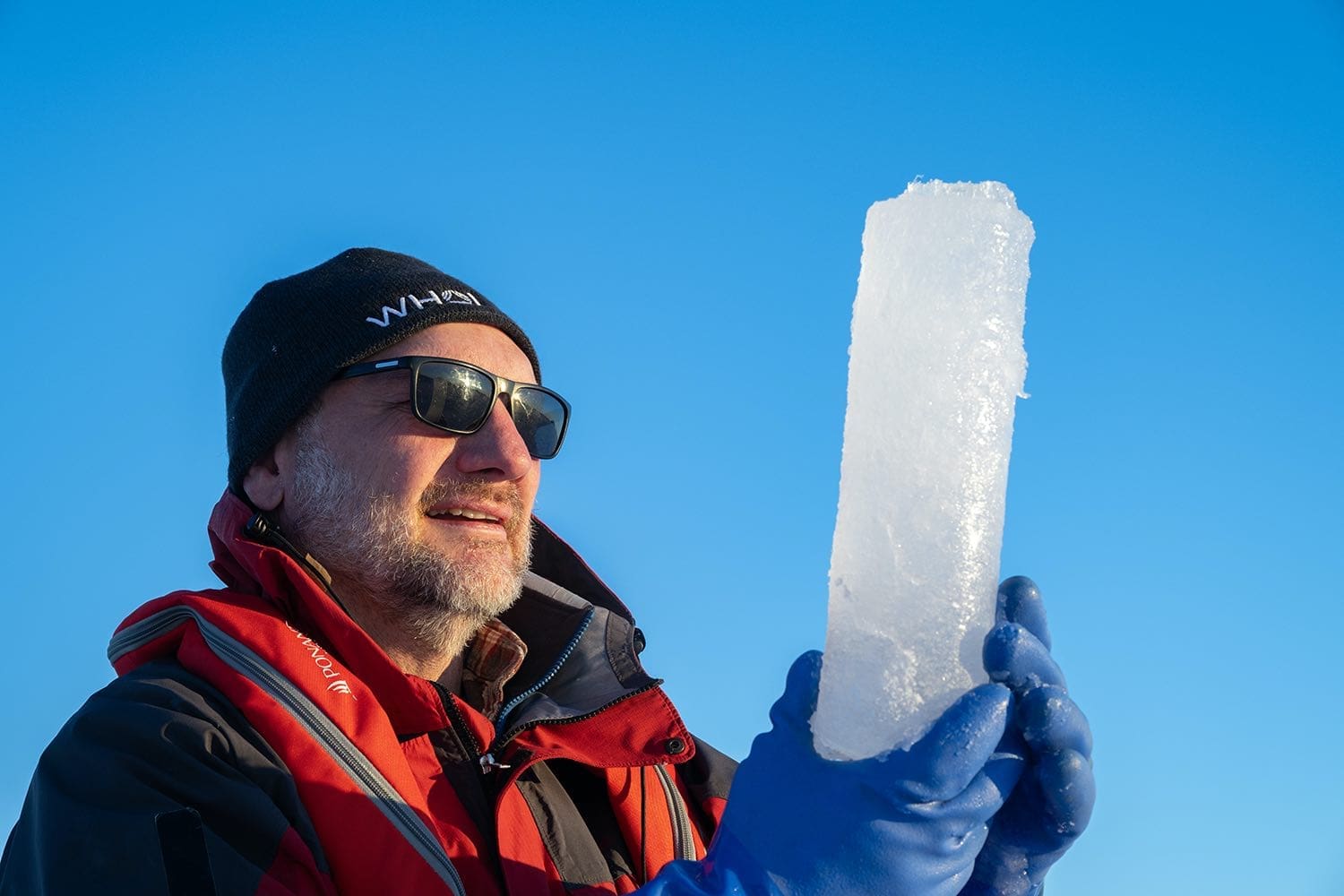
Ted Maksym - Lead Project Investigator

Associate Scientist with Tenure at Woods Hole Oceanographic Institution

WeifengGordonZhang

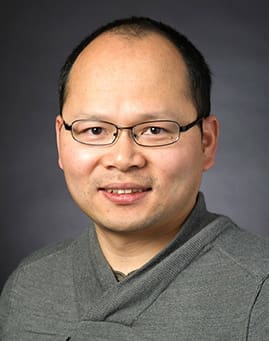
Weifeng (Gordon) Zhang


Senior Scientist at Woods Hole Oceanographic Institution

Artic Sea Ice Restoration Research Fund

Ocean Visions’ Arctic Sea Ice Restoration Research Fund supports high-priority, transparent research on the most promising and under-examined strategies to protect and restore Arctic sea ice. The Fund directs resources to first-order priorities identified in the Arctic Sea Ice Road Maps, enabling responsible progress where little activity currently exists. By pooling contributions from multiple donors, the Fund will be ever more capable of supporting research at the scale this challenge requires. LEARN MORE

Ted Maksym

Ted Maksym is an Associate Scientist with Tenure at Woods Hole Oceanographic Institution. He is a sea ice physicist with expertise in sea ice properties and processes, ice-ocean and ice-climate interactions, and sea ice instrumentation. His work uses a combination of remote sensing, in situ observations and process modelling to address drivers of sea ice variability in both the Arctic and Antarctic.  He has participated in approximately twenty research expeditions to both polar regions. Recent work involves the use of satellite remote sensing to monitor snow depth and sea ice thickness and the processes that control snow and ice thickness distribution and the use of autonomous vehicles and platforms to measure sea ice thickness and the ice-ocean processes that control the seasonal evolution of the ice cover.
Weifeng Zhang

Weifeng (Gordon) Zhang is a Senior Scientist at Woods Hole Oceanographic Institution. He is a physical oceanographer with expertise in ocean circulation, ice-ocean interaction, and biophysical interaction. Dr. Zhang has worked on a broad range of collaborative, interdisciplinary research topics that focus on combining observations and numerical ocean models to understand the interactions among physical, ice (sea ice and ice shelf), biogeochemical, and biological processes in different parts of the ocean, from tropical to polar environments. Some examples of his research on physical oceanographic processes include the dynamics of river plumes, shelf break fronts, Gulf Stream mesoscale eddies, and submesoscale filaments. Meanwhile, he has collaborated with a number of biological oceanographers and ice dynamicists to investigate the impact of ice-ocean interaction on ocean stratification and phytoplankton dynamics in the Arctic and Antarctic coastal oceans.