

Arctic sea ice is disappearing rapidly, with consequences that reach far beyond the Arctic, potentially affecting global climate and weather. A significant amount of Arctic sea ice is lost each year by drifting out through narrow gateways such as the Fram and Nares Straits, where it melts in warmer waters. This project asks a simple but important question: What would happen if this ice loss were reduced? Using state-of-the-art climate models, the team will simulate what happens when sea-ice export through these gateways is blocked—both in today’s climate and in a warmer future.
The goal is to rigorously test whether such an idea could meaningfully slow ice loss, and whether it would create unintended or dangerous side effects in the atmosphere or ocean both in the Arctic and more broadly across the Northern Hemisphere. This includes examining the approach’s reversibility, assessing how the climate responds if blocking ice export is stopped. The results will provide clear scientific evidence to inform future research, policy discussions, and assessments of Arctic climate resilience.
Lead Project Investigator
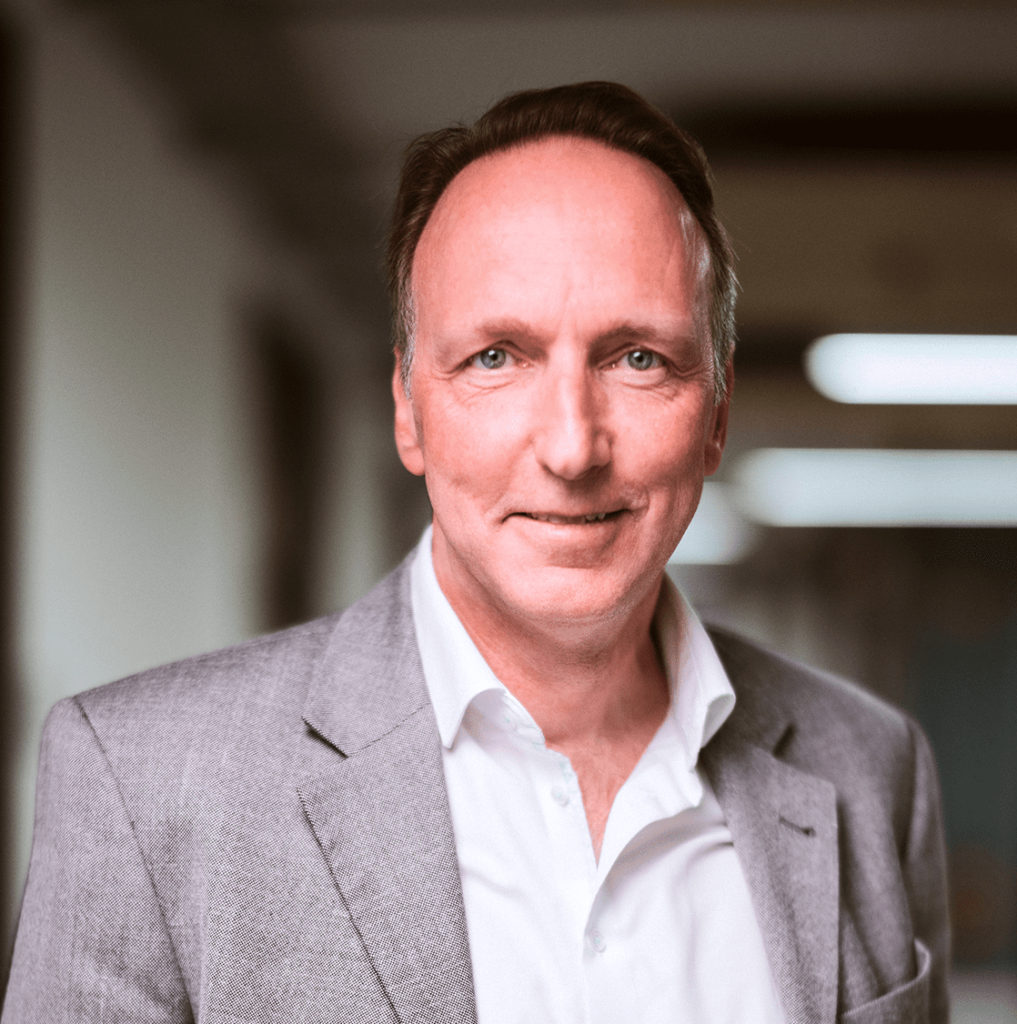
Head of the Climate Dynamics Section at the Alfred Wegener Institute, Helmholtz Centre for Polar and Marine Research (AWI) & Professor for Physics of the Climate System (Theory and Models), University of Bremen
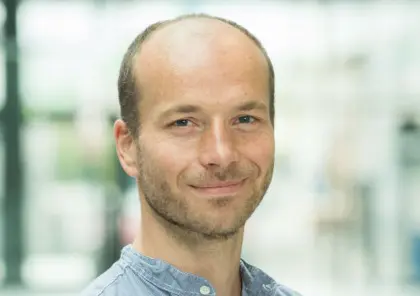
Senior Scientist and Research Group Leader at the Alfred Wegener Institute, Helmholtz Centre for Polar and Marine Research
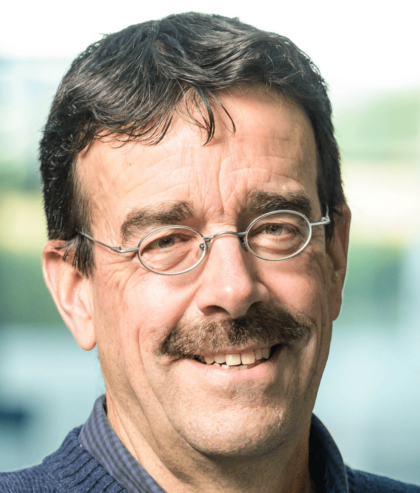
Head of the Sea Ice Section at the Alfred Wegener Institute, Helmholtz Centre for Polar and Marine Research
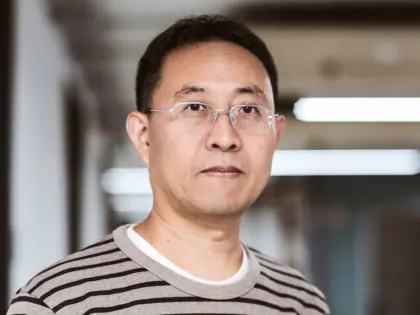
Senior Scientist at the Alfred Wegener Institute, Helmholtz Centre for Polar and Marine Research
Ocean Visions’ Arctic Sea Ice Restoration Research Fund supports high-priority, transparent research on the most promising and under-examined strategies to protect and restore Arctic sea ice. The Fund directs resources to first-order priorities identified in the Arctic Sea Ice Road Maps, enabling responsible progress where little activity currently exists. By pooling contributions from multiple donors, the Fund will be ever more capable of supporting research at the scale this challenge requires.
Professor Thomas Jung is an expert in the analysis, modeling, and prediction of weather and climate, affiliated with the Alfred Wegener Institute, Helmholtz Centre for Polar and Marine Research in Germany. His academic journey began with a PhD in Atmospheric Physics, awarded in 2000 by the University of Kiel in conjunction with the Institute for Marine Research, now known as GEOMAR. Following his doctoral studies, Professor Jung worked for 10 years in the Research Department of the European Centre for Medium-Range Weather Forecasts (ECMWF) in the UK. In his current roles, he serves as the head of the Climate Dynamics section and vice director at the Alfred Wegener Institute. Additionally, Professor Jung acts as the spokesperson for AWI’s research programme “Changing Earth – Sustaining our Future”. He also holds the position of full professor for physics of the climate system at the University of Bremen. Beyond his academic and leadership roles, Professor Jung is know for his active engagement in various scientific committees. His expertise and dedication are further exemplified through his coordination of several major research initiatives. For example, he led the Year of Polar Prediction (YOPP) of the World Meteorological Organisation (WMO); and he is currently coordinating the Eddy Rich Earth System Models (EERIE) project, which is supported by the EU Horizon Europe program.
Helge Goessling investigates the physical climate system and its predictability on scales ranging from days to centuries. After studying biophysics with a focus on theory at the Humboldt Universität of Berlin, global coupled climate models have been one of his main research tools since 2008. While pursuing his doctorate at the MPI for Meteorology, between 2009 and 2012, he investigated the global water cycle and land-atmosphere feedbacks. He joined the AWI in 2012. Since then, his research focus has been on predicting sea-ice conditions and investigating global aspects of climate change, extreme events, Earth’s energy balance and geoengineering methods. From 2014 to 2017, Helge led the coordination office for the World Meteorological Organization’s (WMO) Year of Polar Prediction (YOPP) at the AWI. He headed the Federal Ministry of Education and Research (BMBF)-funded junior research group ‘Seamless Sea Ice Prediction’ (2017-2023), which focused on sea-ice predictability, forecasting and evaluation. He was responsible for coordinating and implementing near-real-time ice drift forecasts for the MOSAiC expedition, which were used for ordering high-resolution satellite images and other logistics tasks. As part of his research group, amongst other things his team developed a climate and sea-ice forecasting system based on the AWI Climate Model. Since 2022, Helge Goessling has been leading a working group and a joint research project for the Helmholtz Earth and Environment Centres in which recently observed extreme events are simulated against the backdrop of various climate conditions in order to gain a better understanding of the impact of climate change using real-world events and to provide an additional scientific basis for adaptation measures.
Christian Haas received a Ph.D. degree in Geophysics from the University of Bremen, Germany, in 1996. In 2007, Christian was awarded an Alberta Ingenuity Scholarship and became a Professor in Sea Ice Geophysics at the University of Alberta, Edmonton, AB, Canada, until 2012, and a Tier 1 Canada Research Chair for Arctic Sea Ice Geophysics at York University, Toronto, ON, Canada. Since 2016, he is a Professor of Sea Ice Geophysics and Remote Sensing at the University of Bremen and heads the sea ice geophysics section at the Alfred Wegener Institute. His research interests include the role of sea ice in the climate, eco, and human systems, with a focus on ice and snow thickness observations using in situ, airborne, and satellite data. As an expert in sea ice microstructure, mechanics, and atmosphere-ice-ocean interactions he is particularly interested in sea ice preservation initiatives involving flooding and ice export blocking.
Qiang Wang is a Senior Scientist at the Alfred Wegener Institute, Helmholtz Centre for Polar and Marine Research (AWI) in Bremerhaven, where he investigates the polar climate system with a particular focus on ocean and sea-ice dynamics and their role in climate variability and change. His research centers on large-scale circulation, eddies and boundary currents, air–ice–sea interactions, and the drivers and impacts of ocean and sea-ice change in a warming climate. His work helps to improve the representation of polar processes in climate simulations and to understand how changes in the Arctic and Antarctic influence the broader Earth system. He obtained his PhD in physical oceanography from the Alfred Wegener Institute and the University of Bremen in 2007, working on the development of the unstructured-grid ocean–sea-ice model FESOM, and since then has been central to its development and application, using high- and variable-resolution simulations to study polar ocean circulation, sea-ice dynamics, the coupling between ocean, ice and atmosphere, and linkages between polar seas and lower latitudes. He has contributed extensively to international model intercomparison efforts such as CORE-II and OMIP-2, supervises PhD students and postdocs, serves as editor for Geoscientific Model Development, Advances in Climate Change Research and Ocean-Land-Atmosphere Research, and is a member of the CLIVAR/CliC Northern Oceans Region Panel.