
Building a Global Ecosystem for Ocean Solutions (GEOS)
GEOS is an Ocean Visions program endorsed by the UN Decade of Ocean Science for Sustainable Development. It provides a structured platform for regional engagement, capacity development, and coordinated learning around ocean–climate solutions.
Ocean–climate solutions are explored in diverse ecological, institutional, and development contexts. GEOS supports this exploration by connecting regional Ocean-Climate Innovation Hubs, Innovation Fellows and Senior Fellows, and endorsed projects into a coherent ecosystem that links science, policy, infrastructure, and institutional readiness.
GEOS focuses on how ocean–climate solutions are taken forward responsibly from early research and policy engagement through readiness, field trials, and applied uses within existing infrastructure networks, while remaining grounded in regional priorities and public value.

Why GEOS
As ocean–climate solutions are developing unevenly across regions with different scientific capacities, infrastructure systems, governance arrangements, and development needs. In many places, early activity is shaped by institutional gaps that affect how proposals are evaluated, how oversight is organized, and how learning is sustained over time.
GEOS addresses this challenge by:
- building the institutional capacity needed to evaluate, govern, and advance ocean–climate solutions responsibly;
- connecting regional experiences and lessons across the GEOS ecosystem; and
- supporting the movement from scientific exploration toward field readiness, oversight, and governance in practice.
Through GEOS, Ocean Visions helps regional actors organize the institutional, technical, and governance work required to assess ocean–climate solutions, support innovation, and advance responsible field learning.
GEOS within the Ocean Visions Strategy
GEOS is delivered through the Reach Program, Ocean Visions’ platform for global engagement, policy work, and regional capacity-building. Its work connects the Ocean-Climate Innovation Hubs with the broader institutional, governance, and partnership efforts needed to support responsible ocean–climate innovation.
Through GEOS, Ocean Visions supports the maturation of Ocean-Climate Innovation Hubs and the institutional systems around them. This work helps partners move from early exploration and policy dialogue toward readiness, responsible field trials, and sustained regional programming.
Within Ocean Visions’ broader strategy, GEOS provides a practical structure through which regional leaders, institutions, and partners can advance the scientific, governance, and institutional work required to move ocean–climate solutions from emerging concepts into responsible practice.
Core Components of GEOS
Ocean-Climate Innovation Hubs
Ocean-Climate Innovation Hubs are the backbone of GEOS. They are regionally grounded platforms that bring together scientific institutions, public sector agencies, entrepreneurs, and community actors to explore ocean-based climate solutions in context.
Each hub functions as:
- a platform for regional learning and coordination,
- a space for integrating science, policy, and sustainable development considerations, and
- a foundation for building institutional readiness for responsible research and development.
While hubs are tailored to regional contexts, GEOS provides the common frameworks and institutional linkages that enable coordination and learning across the network.

Costa Rica
Chile
Ghana
Morocco
Colombia
South Africa
Tanzania
Kazakhstan/Caspian Sea
Kenya
Innovation Fellows and Senior Fellows
Innovation Fellows and Senior Fellows anchor expertise, leadership, and collaboration across the GEOS ecosystem. Working across regions and thematic areas, they help connect local initiatives with broader scientific, policy, and governance discussions.
Fellows contribute by:
- strengthening scientific and policy capacity within Ocean-Climate Innovation Hubs;
- supporting regional strategy development and partner engagement;
- connecting local and regional work with international policy and governance processes; and
- fostering learning and collaboration across hubs.
The fellowship model reflects GEOS’ view that people are central to institutional capacity. By supporting regional leaders who can connect science, policy, governance, and local priorities, GEOS helps build capacity that can remain embedded in institutions over time.
Ocean-Climate Innovation Fellows
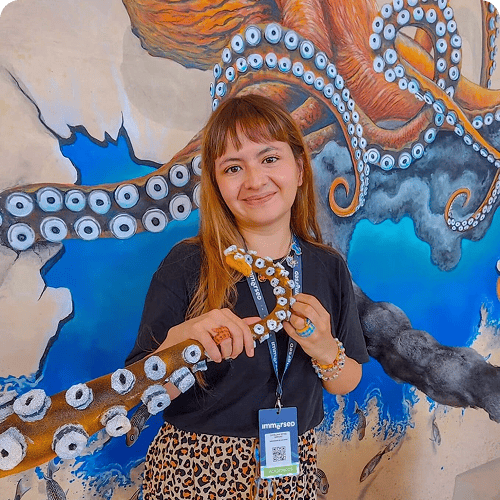

Catalina Reyes Vargas
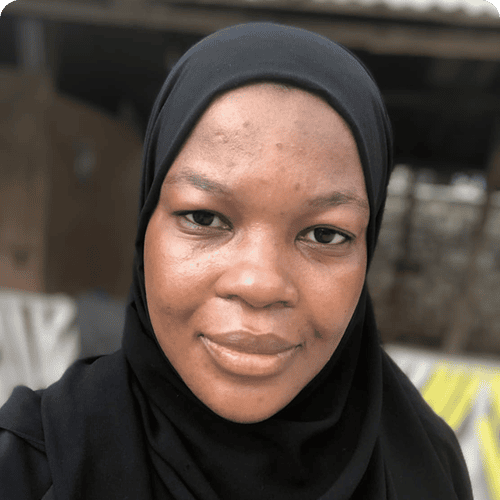
Mariam Swaleh
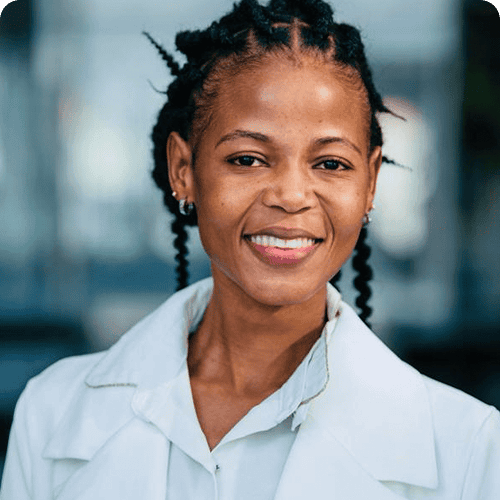
Shamim Nyanda
Ocean-Climate Innovation Senior Fellows

María José Urrutia Rivas

Caitlin Wale
Endorsed Projects under the UN Ocean Decade
GEOS hosts and coordinates a growing portfolio of Ocean Decade-endorsed projects that advance ocean–climate solutions across research, testing, governance, restoration, and capacity development.
These initiatives:
- provide practical examples of emerging ocean–climate solutions in different regional and institutional contexts;
- contribute evidence, experience, and guidance across the GEOS ecosystem; and
- strengthen the technical, governance, and policy foundations needed for credible ocean–climate innovation.
Through this portfolio, GEOS brings together practical examples of ocean–climate innovation that can inform future research, governance, and implementation efforts. These projects help clarify what responsible development requires in practice, from technical design and testing to policy engagement, institutional coordination, and capacity building.
Endorsed Projects:
Through this portfolio, GEOS brings together practical examples of ocean–climate innovation that can inform future research, governance, and implementation efforts. These projects help clarify what responsible development requires in practice, from technical design and testing to policy engagement, institutional coordination, and capacity building.
- 3D Purpose Built Reefs for Marine Restoration (Coast3D Reefs) — Coastruction
- Aotearoa New Zealand Marine Carbon Forum — University of Otago
- Arctic Sea Ice Management — Real Ice
- Arctic Sea Ice Restoration — Arctic Reflections
- Biocatalytic refining of seaweed carbohydrates for producing higher-value, polymer precursors (SEABIOCAT) — Matís ltd.
- BLUE BIOCULTURE CENTER: Living Laboratory — Municipality of Cabo Frio
- Blue Carbon Assessment for Seagrass and Kelp – project completed
- Blue House Fellowship Programme — Kelp Forest Foundation
- Borneo Ocean Resilience – 4Nature, Economy, Outreach — Poni Group
- Caspian Sea Carbon Dioxide Removal Project (CaspianCDR) — Caspian Environmental Consortium Ltd.
- Centre of Excellence in Ocean Research & Engineering — INESC TEC
- Coastal Sargassum Interception and Regeneration — Grogenics
- Community-led MOSES Reef Restoration Cambodia (MOSES-Cambodia) – ReefSystems
- Demonstrating Ocean CDR with Hydrogen Production — Equatic
- Elite Centre of Aquatic Nature-based Solutions— University of Southern Denmark
- Engineering Resilient Caribbean Coastlines (ENRICO) — Smith Warner International
- Governing Changing Oceans — The University of Melbourne
- Growing Oceans for Tongan Climate Resilience — Growing Oceans, an initiative of AltaSea at the Port of Los Angeles
- Hinemoana Halo Ocean Initiative (H2O) — Conservation International Aotearoa
- Hydrospatial Analytics for Resilient Marine Observation & Navigation through Innovative Science & Engagement Project (HARMONiSE) — Seychelles Hydrospatial Observatory for Research and Exploration Institute
- Integrating MSP and Blue Economy in the Caribbean — National Ocean Technology Center, Ministry of Natural Resources, China
- Marine Carbon Sinks in Decarbonisation Pathways – project completed
- Marine Management and Climate — Norwegian Ministry of Climate and Environment
- Marine Restoration with Nature-based Solutions — Archireef Limited
- Nature-inclusive designs for offshore renewables — Norwegian Institute for Water Research
- Nazaré Artificial Reefs Seaweed Planting Pilot — Hope Zones Foundation
- North Atlantic Carbon Observatory — Ocean Frontiers Institute
- Ocean Mitigation Impacts to Ecosystems and People — Department of Fisheries and Oceans (DFO), Canada
- Oslofjord Kelp Park — Bellona Foundation
- Revolutionizing coral conservation through science and community-led action — Coral Gardeners
- Rewilding the Oceans with Giant Kelp — Kelp Blue
- SanctuaryReef Food Basket: Empowering Aquafarmers — Zanzibar Seaweed Cluster Initiative
- Sargasso Sea Project — Sargasso Sea Commission
- SEA’TIES: Sharing Solutions with Coastal Cities to Tackle Sea-Level Rise – project completed
- Seatrees: Community-Powered Ocean Restoration — SeaTrees
- Solent Seascape Project (SSP) — Blue Marine Foundation
- The Centre for Sustainable Ocean Science — Åbo Akademi University
- Tides of Innovation — Kneyzus Energy
- Unlocking the Potential of Seaweeds and Halophytes through Biorefinery for Enhanced Resilience in the Aquaculture Agri-Food and Chemical Industries (ReSEAlience) — Lulea Tekniska Universitet (LTU)
- Virtual Platform for Sustainable Ocean Education — Blue Economy Research Institute, University of Seychelles
- Whale Safe — Passamaquoddy Tribe at Pleasant Point (Sipayik)
Building Field Readiness through Global South Leadership
Through GEOS, Ocean Visions supports the institutional, technical, and governance work needed to move ocean–climate solutions from early research and policy engagement toward responsible field learning. This work draws on experience from initiatives such as CINCO in Chile and SAILOR in South Africa and is connected across the Ocean-Climate Innovation Hubs.
This includes support for program design, partnership development, safeguards, stakeholder engagement, monitoring needs, and governance practices. GEOS treats field readiness as a coordinated process that brings together scientific institutions, public authorities, infrastructure operators, community actors, and other partners whose roles become important as research moves closer to real-world settings.
GEOS places particular attention on coastal and marine infrastructure systems as sites where scientific, regulatory, operational, and public-interest questions can be examined together. These settings can help clarify what responsible research requires in practice, including the institutional arrangements needed for oversight, collaboration, and learning.
Through the Ocean-Climate Innovation Hubs, GEOS supports locally grounded approaches that connect ocean–climate innovation with regional priorities such as water management, coastal protection, food systems, livelihoods, and sustainable blue economies. This work helps regional actors engage more effectively with emerging research, governance, and finance discussions while maintaining a focus on public value.